
The global market for home beauty devices has expanded rapidly in recent years as consumers increasingly look for professional-level skincare treatments they can perform at home. Technologies that were once only available in dermatology clinics and beauty salons are now widely used in portable home-use devices. Among the most popular technologies are radio frequency (RF), electrical muscle stimulation (EMS), and intense pulsed light (IPL).
Although these technologies are often grouped together in the beauty device industry, they serve very different purposes and deliver different skincare results. For brands, distributors, and buyers sourcing beauty devices, understanding how RF, EMS, and IPL devices work is essential when selecting products or developing new product lines.
This article explains the key differences between RF, EMS, and IPL beauty devices, including their functions, benefits, treatment results, and the types of skincare concerns each technology is designed to address.
Why Understanding Beauty Device Technologies Matters
With the increasing demand for non-invasive skincare solutions, consumers are becoming more knowledgeable about beauty technologies. Many customers now search for specific technologies such as RF skin tightening devices, EMS facial toning tools, or IPL hair removal machines.
For beauty brands and distributors, understanding these technologies helps in several important ways.
First, it allows businesses to develop more targeted product lines based on consumer needs. Second, it improves marketing communication by clearly explaining how each device works. Third, it helps brands avoid confusion by ensuring that customers choose the correct device for their skincare goals.
Because RF, EMS, and IPL devices all operate using different principles, each technology solves different beauty concerns.
Overview of RF, EMS, and IPL Beauty Technologies
Before examining the differences in detail, it is helpful to understand the basic concept behind each technology.
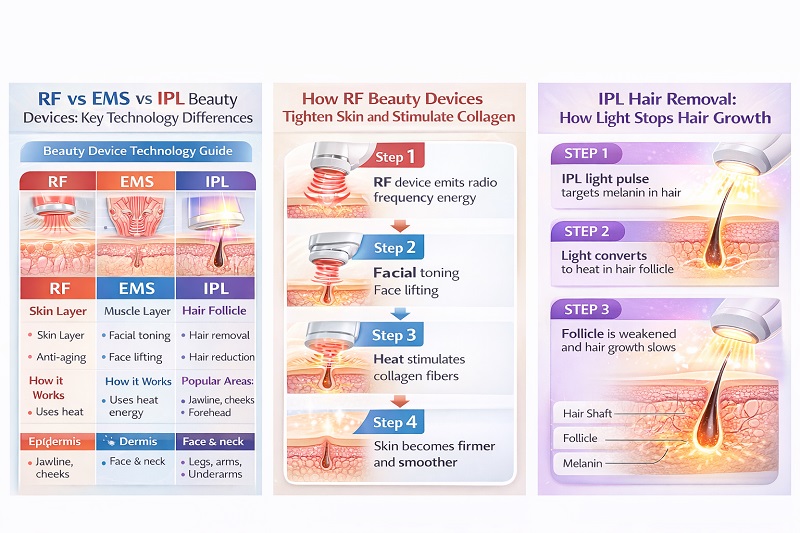
Radio frequency devices use controlled heat energy to stimulate collagen production in the deeper layers of the skin. This technology is primarily used for skin tightening and anti-aging treatments.
EMS devices use electrical impulses to stimulate facial muscles. These impulses trigger muscle contractions that help tone and strengthen facial muscles, improving facial contours.
IPL devices use broad-spectrum light energy to target melanin in hair follicles. This process damages the hair root and gradually reduces hair growth over time.
Because these technologies target different layers of the skin and tissue, they are used for different beauty treatments.
What Is RF Technology in Beauty Devices?
RF stands for radio frequency, a technology widely used in both professional aesthetic clinics and home beauty devices.
RF devices emit controlled radio frequency energy that penetrates into the dermis layer of the skin. This energy generates heat within the tissue, which stimulates collagen and elastin production.
Collagen is the structural protein responsible for maintaining skin firmness and elasticity. As people age, collagen production naturally declines, leading to wrinkles, sagging skin, and loss of firmness.
RF treatments help address these issues by encouraging the skin to produce new collagen.
Key Benefits of RF Beauty Devices
RF beauty devices are commonly used for anti-aging skincare routines. The heat generated by radio frequency energy improves skin elasticity and promotes tissue remodeling.
Some of the most common benefits include:
Improved skin firmness
Reduction of fine lines and wrinkles
Better skin elasticity
Enhanced facial contour definition
Improved skin texture
RF devices are particularly popular for facial lifting treatments and skin tightening around areas such as the cheeks, jawline, forehead, and neck.
Image Suggestion for This Section
Suggested image concept
Title: How RF Technology Tightens Skin
Visual idea
A cross-sectional illustration of the skin showing RF energy penetrating into the dermis layer and stimulating collagen fibers.
Alt text
Radio frequency beauty device stimulating collagen production in skin layers
What Is EMS Technology in Beauty Devices?
EMS stands for electrical muscle stimulation. Unlike RF technology, which focuses on skin tissue, EMS technology works directly on facial muscles.
EMS devices deliver low-level electrical impulses that cause facial muscles to contract and relax. These contractions mimic the effects of muscle exercise, helping strengthen the underlying facial muscles.
Over time, stronger facial muscles can improve the overall structure of the face.
Key Benefits of EMS Beauty Devices
EMS beauty devices are commonly used for facial toning and lifting effects. Because they stimulate the muscles beneath the skin, they can enhance facial contours and improve muscle firmness.
Typical benefits of EMS facial devices include:
Improved facial muscle tone
More defined jawline
Reduction of facial sagging
Enhanced skin firmness
Improved blood circulation
Many EMS devices are designed to target areas such as the cheeks, jawline, and forehead.
EMS technology is often combined with other technologies such as RF or LED light therapy in multifunctional beauty devices.
What Is IPL Technology in Beauty Devices?
IPL stands for intense pulsed light. This technology is primarily used for long-term hair reduction and skin treatments.
Unlike RF and EMS technologies, IPL works using light energy rather than heat or electrical stimulation.
IPL devices emit broad-spectrum pulses of light that are absorbed by melanin in the hair follicle. The absorbed light converts into heat, which damages the follicle and slows down future hair growth.
Over multiple treatment sessions, IPL can significantly reduce hair growth.
Key Benefits of IPL Beauty Devices
IPL devices are most commonly used for hair removal treatments on various parts of the body.
Common application areas include:
Legs
Arms
Underarms
Bikini line
Faţă
In addition to hair removal, some IPL devices can also be used for skin rejuvenation treatments such as reducing pigmentation and improving skin tone.
IPL hair removal devices are among the most popular home beauty devices because they offer long-term results compared to traditional shaving or waxing.
Image Suggestion for This Section
Suggested image concept
Title: IPL Hair Removal Process
Visual idea
An illustration showing light pulses targeting hair follicles beneath the skin and disrupting the growth cycle.
Alt text
IPL light pulses targeting hair follicle for long term hair removal
Comparing RF, EMS, and IPL Beauty Devices
Although these technologies are sometimes integrated into multifunctional beauty devices, they are fundamentally different in terms of mechanism and treatment results.
Technology Mechanism
RF technology works by generating controlled heat within the skin to stimulate collagen production.
EMS technology works by delivering electrical impulses that stimulate muscle contractions.
IPL technology works by delivering light pulses that target pigment in hair follicles.
Target Treatment Area
RF devices primarily target the dermis layer of the skin.
EMS devices target facial muscles beneath the skin.
IPL devices target hair follicles located in the skin.
Main Beauty Purpose
RF devices are mainly used for anti-aging and skin tightening.
EMS devices are mainly used for facial toning and contouring.
IPL devices are mainly used for long-term hair removal.
Treatment Results
RF treatments gradually improve skin firmness and elasticity over time.
EMS treatments improve facial muscle tone and lift.
IPL treatments gradually reduce hair growth after multiple sessions.
Understanding these differences helps buyers choose the right technology depending on their product strategy.
Why Many Beauty Devices Combine Multiple Technologies
In recent years, many manufacturers have started integrating multiple technologies into a single device.
For example, some beauty devices combine RF and EMS technology to provide both skin tightening and muscle toning benefits.
This combination approach offers several advantages.
First, it increases product value by providing multiple skincare functions. Second, it improves treatment effectiveness by targeting different layers of the face simultaneously.
Multifunctional beauty devices are becoming increasingly popular in the global beauty market because they provide more comprehensive skincare solutions.
Safety Considerations for Home Beauty Devices
Because beauty devices interact directly with the skin, safety is an important factor for both manufacturers and consumers.
Reliable devices should include several safety features such as:
Temperature control systems
Skin contact sensors
Automatic shut-off protection
Adjustable energy levels
Proper product testing and certification are also essential to ensure safety and regulatory compliance.
Consumers should always follow the recommended usage guidelines to avoid overuse or skin irritation.
Market Trends for RF, EMS, and IPL Devices
The home beauty device market continues to grow rapidly, with RF, EMS, and IPL technologies leading the category.
Several trends are shaping the industry.
Consumers increasingly prefer non-invasive beauty treatments that can be performed at home.
Portable devices with professional-level technology are becoming more popular.
Multifunctional devices combining several technologies are gaining strong demand.
There is also growing interest in personalized skincare devices that adapt treatment intensity based on skin conditions.
Manufacturers that invest in advanced research and product innovation are likely to remain competitive in this expanding market.
Choosing the Right Beauty Device for Your Needs
Because RF, EMS, and IPL devices address different skincare concerns, choosing the right device depends on the user's goals.
People who want to reduce wrinkles and improve skin firmness may prefer RF devices.
Those who want to improve facial contours and muscle tone may benefit from EMS devices.
Consumers seeking long-term hair removal solutions will likely choose IPL devices.
Understanding the differences between these technologies helps consumers make more informed purchasing decisions.
Concluzie
RF, EMS, and IPL beauty devices each offer unique benefits and serve different skincare purposes. RF technology focuses on collagen stimulation and skin tightening. EMS technology targets facial muscles to improve tone and contour. IPL technology uses light energy to reduce unwanted hair growth.
Although these technologies operate in different ways, they all contribute to the growing demand for convenient, non-invasive beauty treatments that can be performed at home.
For brands, distributors, and buyers in the beauty device industry, understanding how these technologies differ is essential for building successful product strategies and meeting the evolving needs of modern skincare consumers.
As innovation continues in the beauty technology sector, RF, EMS, and IPL devices will likely remain key technologies driving the future of home beauty treatments.